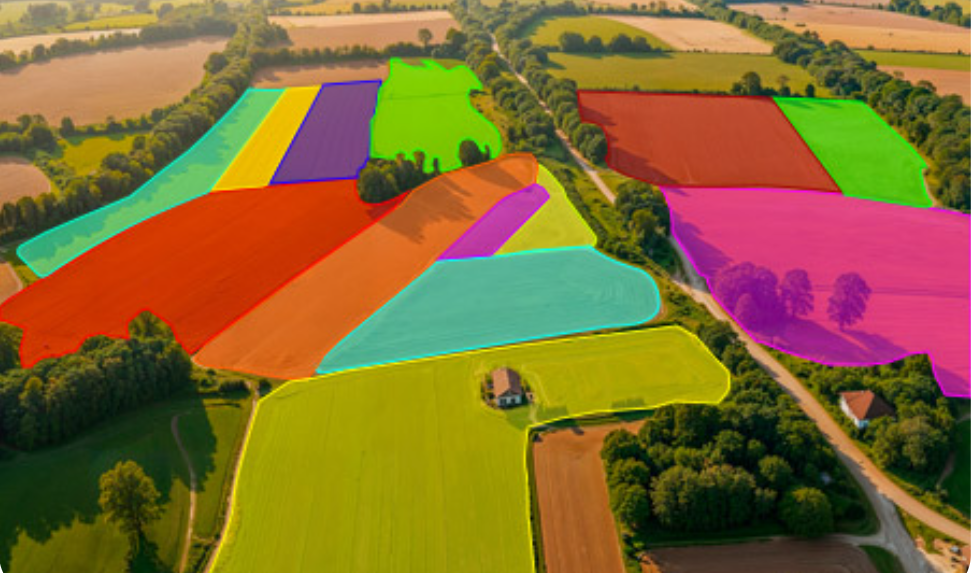
● Crop Field · 0.98
● Bare Soils · 0.96
● GRASSLAND · 0.89
● TREE COVER · 0.94
▼ CLASS DETECTION SUMMARY
CROP FIELD ×2
BARE SOIL ×2
GRASSLAND ×1
TREE COVER ×1
FARM STRUCTURE ×1
7 OBJECTS · mAP 0.94 · QA PASS ✓
What It Is
SAM2-powered Computer vision training data at speed, without sacrificing accuracy
Image annotation is the process of labeling images with structured information object locations, boundaries, categories, or attributes so that computer vision models can learn to perceive and understand visual content. Every object detection, segmentation, and recognition system depends on millions of carefully annotated images.
Get a Free Audit →